SHG Business vs Household Expenses: How to Separate Them
Running a small business with SHG credit? Keep household spending out of business money with two cash boxes, a daily register, a fixed draw and a ₹ example.
In this article (8 sections)
To separate household spending from your SHG business, keep business cash physically apart, write every rupee that enters or leaves the business in one register, and take money home only as a fixed, recorded "draw". This one habit shows whether the tailoring, dairy, shop or food activity really earns, and it protects your loan repayment. The steps below work whether you sell for cash, by UPI or both. Rules referred to are as of November 2026; group and bank practices vary, so check with your SHG, village organisation (VO) or bank.
Self-help groups under DAY-NRLM follow the Panchasutras, one of which is keeping books up to date. Those are the group's books. This guide is about the member's own small business, which also needs its own simple record. For credit terms and loan doses, see NRLM SHG loans and Lakhpati Didi.
Why mixing money causes problems
When school fees, groceries and medicine come out of the same purse as flour, thread or fodder, three things happen:
- Profit becomes invisible. Sales look good, but you cannot tell what is left after costs.
- The instalment gets squeezed. Money set aside for the SHG or bank repayment is spent at home, and the group's account can fall overdue. Under the RBI master circular on DAY-NRLM, interest subvention is available only while the loan account is standard, so delays can cost the whole group.
- Working capital shrinks. If you keep eating into stock money, the next purchase is smaller, sales fall, and the business slowly closes.
The general guide to separating personal and business finances covers current accounts and owner salaries for bigger firms. Below is the version that fits a home-based or village enterprise.
What counts as business and what counts as household
| Item | Business | Household | Note |
|---|---|---|---|
| Raw material (milk, cloth, flour, seeds) | Yes | Keep bills or note the seller | |
| Transport to market or to buy stock | Yes | Even small auto or bus fares | |
| Electricity, gas, rent | Partly | Partly | Split by a fair share if the business runs at home |
| Mobile recharge | Partly | Partly | Business share if used for orders |
| SHG loan instalment taken for the business | Yes | Interest is a business cost; principal is repayment | |
| Family food, school fees, medicine | Yes | Pay from your draw, not the business box | |
| Your own labour | Not an expense in the register; it is paid through the draw | ||
| Items taken from stock for home use | Yes | Write them down as a draw at cost price |
The last row is the one most people miss. If you run a kirana shop and take two kilos of dal home, that is a household draw, not a "loss".
Step-by-step: set up the separation
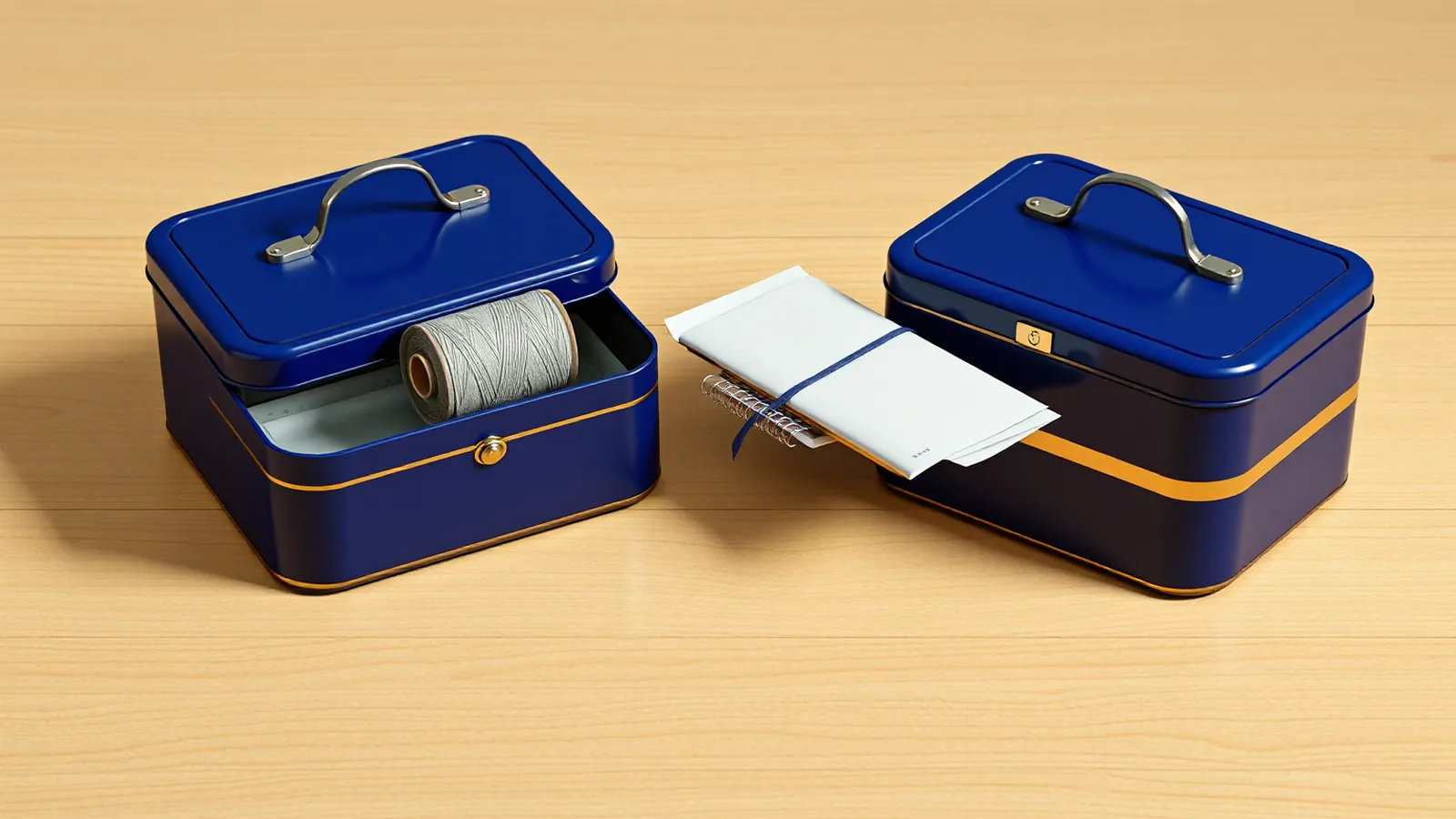
- Use two containers. One box, purse or pouch only for business cash. Household money stays elsewhere.
- Open one register. A notebook with columns: date, sale received, expense paid, description, draw for home, balance. The village CRP or bookkeeper can show you a format if your SRLM uses one.
- Decide your draw. Choose a fixed weekly or monthly amount you can take home. Start low; raise it only when the business clearly sustains it.
- Set aside the instalment first. On each sale day, put the loan share aside before anything else. Use the EMI calculator to know the monthly amount.
- Keep UPI separate if you can. If customers pay by UPI, use a QR code linked to a bank account you use only for the business, or note every UPI receipt in the register the same day.
- Count weekly. Once a week, count the box, check the register balance and fix differences while you still remember.
- Summarise monthly. Total sales, total expenses, draw, loan paid and closing cash. This one line per month is what the SHG, VO or bank will want to see.
A simple register format
| Date | Particulars | Money in (₹) | Money out (₹) | Draw for home (₹) | Cash balance (₹) |
|---|---|---|---|---|---|
| 1 Nov | Opening balance | 2,000 | |||
| 1 Nov | Sold 20 blouses | 3,000 | 5,000 | ||
| 2 Nov | Cloth and thread | 1,800 | 3,200 | ||
| 3 Nov | Weekly draw | 1,000 | 2,200 |
Worked example: a tailoring unit with a ₹50,000 loan
Sunita takes ₹50,000 from her SHG's bank loan to buy a motorised sewing machine and stock. Assume the group passes on a monthly instalment of about ₹1,544 for 3 years (₹50,000 at 7% over 36 months; illustrative, the actual amount depends on the rate and tenure your group agrees with the bank and members).
In October she records:
- Sales: ₹18,000
- Cloth, thread, buttons: ₹7,500
- Electricity share and transport: ₹900
- Loan instalment: ₹1,544
Business surplus before her draw: ₹18,000 − ₹7,500 − ₹900 − ₹1,544 = ₹8,056.
She had been taking money home whenever needed and found the box nearly empty at month-end. When she totalled the register, household withdrawals were ₹9,200, which is ₹1,144 more than the business earned. She was eating into stock money.
She fixes a draw of ₹1,500 a week (₹6,000 a month). That leaves about ₹2,056 a month in the business to build stock for the festival season and a small buffer for a slow month.
| Month | Surplus before draw | Draw | Left in business |
|---|---|---|---|
| Before (October) | ₹8,056 | ₹9,200 | −₹1,144 |
| After (fixed draw) | ₹8,056 | ₹6,000 | ₹2,056 |
When the household needs money urgently
Emergencies happen. Handle them so the business survives:
- Use the SHG's internal lending for household emergencies rather than draining stock money. Many groups lend from their own savings for consumption needs; the terms are set by the group.
- Record any extra draw clearly with the reason, and plan to rebuild the stock money.
- Tell the group if you cannot pay an instalment on time. Early discussion is better than a missed payment that affects the whole group.
- Avoid stacking loans. Taking a second loan from a microfinance lender to cover the first can lead to over-indebtedness. RBI rules for microfinance require lenders to assess household income and cap repayment obligations; read microfinance loan rules.
Common mistakes
| Mistake | Fix |
|---|---|
| Not counting goods taken home | Write them as a draw at cost price |
| Paying household bills from business UPI | Move the amount to your household account and record it as a draw |
| Counting the whole loan instalment as an expense | Only interest is a cost; principal reduces the loan |
| Skipping records in busy weeks | Note totals at least daily, even on a phone note |
| Raising the draw after one good month | Wait for two or three steady months |
How this helps with credit and support
Clear records help in three ways. They support the SHG's Micro Credit Plan for the next loan dose. They show household income from the activity, which SRLM staff use to track Lakhpati Didi progress (₹1 lakh or more household income a year). And they make it easier to apply for individual enterprise loans later; see loan schemes for women entrepreneurs.
If you plan to move to a larger loan, such as Mudra, banks will ask about sales and costs. The register you keep now becomes the base of that project report.
Key takeaways
- Keep business cash in its own box or account and household money elsewhere.
- Write every sale, expense and household draw in one register, and count weekly.
- Set aside the loan instalment before taking a draw; fix the draw at a level the business can afford.
- In the example, a fixed ₹6,000 monthly draw turned a ₹1,144 shortfall into ₹2,056 a month kept in the business.
- Use group internal lending for emergencies and tell the group early if an instalment is at risk.
Related guide: How to Reconcile an SHG Passbook With the Group Ledger.
Frequently asked questions
Why should an SHG member keep household and business money separate?
Mixing the two hides whether the business actually makes a profit. It also makes it hard to repay the SHG or bank loan on time, and the group's books and the Micro Credit Plan assume the loan is used for the stated livelihood purpose.
Do I need a separate bank account for a small SHG business?
Not always. A separate cash box or pouch and a simple register can be enough at first. Once business payments come by UPI, a second savings account or a current account used only for the business makes tracking much easier; check charges and minimum balance with the bank.
How much can I take from the business for household needs?
Fix a regular amount, such as a weekly or monthly draw, that the business can afford after keeping money for raw material and the loan instalment. Write every draw in the register so it is not mistaken for a business expense.
Can I use part of my SHG loan for a household emergency?
The loan is sanctioned for the purpose written in the Micro Credit Plan. If an emergency forces a change, tell the group at the next meeting and record it, because the group is jointly responsible for repayment and diversion can hurt its grading and next loan dose.
What records help me show income for Lakhpati Didi tracking?
A daily sales and expense register, receipts for major purchases and a monthly summary of profit and household draws. These let the SHG, village organisation or block staff see household income from the activity across seasons.
This article is for general education and is not personalised financial, tax or legal advice. Rates and rules are as of 4 Nov 2026; confirm current terms with your lender, AMC or a qualified adviser.